logo
China ZhengZhou ZhongDeBao Industrial Co., LTD
ZhengZhou ZhongDeBao Industrial Co., LTD
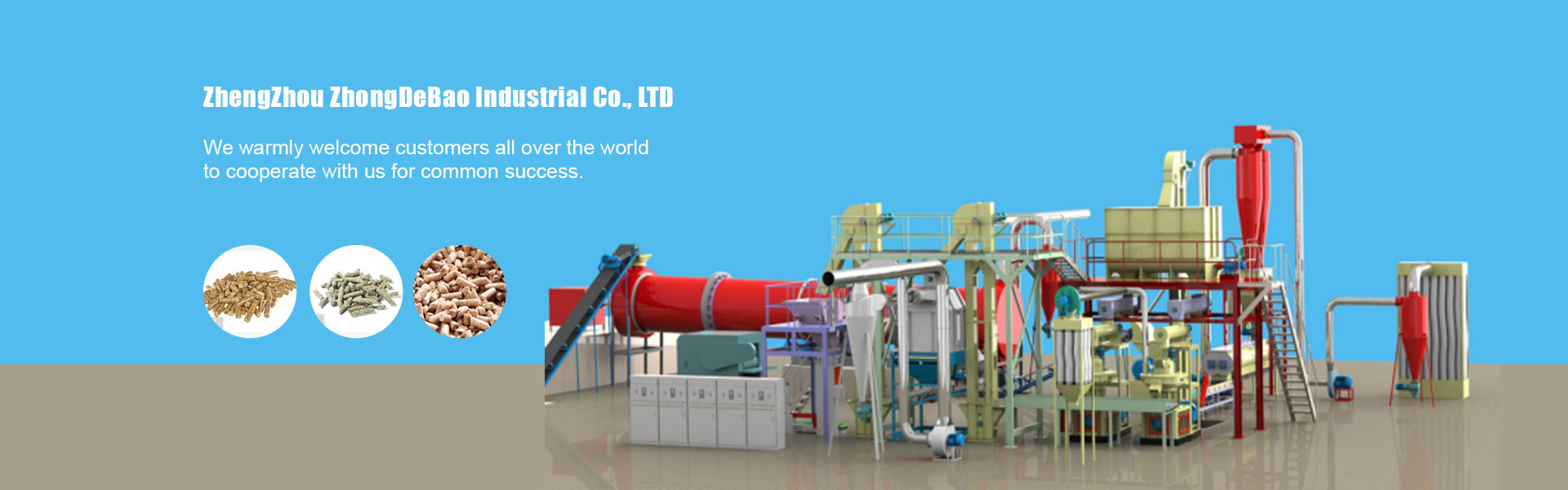
Zhengzhou ZhongDeBao Industrial CO.,LTD , established in 2013, is a one-stop solution supplier engaged in the research, development, sale and service of feed pellet machine for poultry and livestock feed, floating and sinking aquatic feed, and pet food for dog and cat, also complete flat and ring die wood pellet production line from wood crusher to bag packaging and sealing machine. We are located in zhengzhou city with convenient transportation access. Dedicated to strict quality control and ...
Learn More
Request A Quote
No. of Employees:
100+
Annual Sales:
6000000+
Year Established:
2013
Export p.c:
70% - 80%
WE PROVIDE
THE BEST SERVICE!
You can contact us in various ways
Contact Us
Tel
86-371-55051587-+8615515959899
Fax
86-371-86546711
Whatsapp
8615515959899
Wechat
+8615515959899

quality Pellet Mill Machine & Wood Pellet Mill factory

Automatic Bagging Machine Animal Feed Pellet Production Line For Grains 1-12mm Video

Automatic Bagging Machine Animal Feed Pellet Production Line For Grains 1-12mm

Production Capacity: 0.5-30 Tons/h

Power Supply: 380V/50Hz/3Phase

Moisture Content Of Raw Materials: ≤20%

Get Best Price
0.8-4t/H Horizontal Pellet Mill Animal Feed Ring Die Pellet Machine 55kw Video

0.8-4t/H Horizontal Pellet Mill Animal Feed Ring Die Pellet Machine 55kw

Product Name: Pellet Mill Machine

Die Diameter: 450-700mm

Wood Pellet Diameter: 4-12mm

Get Best Price
50~2000kg/H Dry Fish Feed Extruder Machine Dog Food Production Machine 5.5-160 KW Video

50~2000kg/H Dry Fish Feed Extruder Machine Dog Food Production Machine 5.5-160 KW

Product Name: Dry Type Fish Feed Extruder

Voltage: 220V/380V/415V/440V

Warranty: 1 Year

Get Best Price
Robust 380v Sawdust Pellet Machine 10-20% Moisture Content Video

Robust 380v Sawdust Pellet Machine 10-20% Moisture Content

Voltage: 380V

Pellet Density: 1.1-1.3t/m3

Diameter Of Pellet: 6-12mm

Get Best Price
WHAT CUSTOMERS SAYS
Mr baba
Hello Steven, I am very happy to announce that, thanks to your instructions and the quality of the material, we have succeeded in making beautiful pellets.
Mr Magueye
2 type of subdust one is Brown theother white the other white very nicepellets.. Now we need to make test with thispellet to see how it's function
News View More
How to Solve the Low Capacity Issue in Fish Feed Production Lines?
With the rapid growth of the aquaculture industry worldwide, the demand for fish feed is continuously increasing. However, many fish farming enterprises face the problem of low production capacity, which not only affects production efficiency but also raises operational costs. This article will explore how to solve this issue and provide guidance on selecting the appropriate fish feed production equipment, particularly when choosing the right fish feed extruder. Main Manifestations of Capacity Bottlenecks Low production capacity in fish feed production lines is often reflected in the following aspects: Slow production speed: The equipment capacity fails to meet expectations, leading to longer production cycles. Inconsistent product quality: Low capacity may result in unstable product specifications, affecting the quality of fish feed. Frequent equipment failures: Equipment breaks down frequently due to excessive load or technical issues, causing production downtime. High energy consumption: Inefficient equipment leads to energy waste, thus increasing production costs. How to Solve the Low Capacity Issue? To solve the low capacity issue in fish feed production lines, it is essential to choose the right extrusion equipment. The extruder is the core machine in the feed production process, directly impacting production efficiency and product quality. 1. Choose the Right Fish Feed Extruder The type of fish feed extruder directly determines production efficiency and output. Common types of fish feed extruders include single-screw extruders, twin-screw extruders, and wet extruders. Single-screw extruder: Suitable for small-scale production. It has a simple structure and low maintenance costs, making it ideal for producing standard feed. However, it may have limitations when processing complex raw materials. Twin-screw extruder: Twin-screw extruders offer higher output and better mixing effects, making them ideal for large-scale production. They can handle a wide range of complex raw materials and are especially suitable for aquaculture feed and pet feed production. Due to their high efficiency, twin-screw extruders can significantly increase production line capacity, avoiding capacity bottlenecks. Wet extruder: Wet extruders are mainly used in feed production processes that require more precise control. They provide better puffing effects and higher nutrient retention rates. Wet extruders are particularly suitable for producing aquaculture feed and pet feed, which require higher moisture and temperature control. 2. Adjust Equipment Configuration Based on Output Requirements Selecting the right equipment configuration based on production scale is crucial. For larger production demands, using high-output twin-screw extruders and wet extruders can significantly improve capacity and ensure efficient production. For companies in the early stages of expansion, a single-screw extruder may be a more cost-effective option to gradually scale up production. 3. Equipment Maintenance and Energy Efficiency In addition to solving capacity bottlenecks, the stability and maintenance costs of the equipment are equally important. Frequent failures of equipment, such as aquatic pet feed extruders, can affect production efficiency and increase operational costs. Choosing equipment with high stability and low maintenance requirements can reduce downtime and increase overall production capacity. Moreover, energy efficiency is another factor not to be overlooked. Modern extruders are often equipped with energy-saving technologies to reduce energy consumption, thus lowering operational costs. In regions like Southeast Asia, where energy prices can fluctuate, selecting energy-efficient equipment is critical for long-term sustainability. Conclusion To solve the low capacity issue in fish feed production lines, the key is to select the right equipment. Whether it's a single-screw extruder, twin-screw extruder, or wet extruder, choosing the right machine will directly impact production efficiency and costs. By selecting high-efficiency and stable fish feed extruders based on the needs of the business, companies can significantly increase their production capacity, resolve current capacity bottlenecks, and meet the growing demand for aquaculture and pet feed in the market.
2026-04-28
How to Choose the Right Extruder for Fish Feed Production Lines to Improve Production Efficiency and Product Quality?
How to Choose the Right Extruder for Fish Feed Production Lines to Improve Production Efficiency and Product Quality? In the aquaculture industry, producing high-quality fish feed is crucial for improving farming efficiency and increasing market competitiveness. Selecting the right fish feed extruder can improve production efficiency and ensure consistent product quality. However, with different types of extruders available, businesses need to make informed decisions based on specific production needs, raw material characteristics, and final product requirements. This article will guide you on how to select the right extruder to enhance production efficiency and product quality in fish feed production lines. 1. Challenges in Fish Feed Production As the aquaculture industry grows, the demand for high-quality fish feed continues to increase. However, the production process still faces several challenges: Inconsistent product quality: Feed pellet size, hardness, and shape may vary, affecting solubility, buoyancy, and fish feeding behavior. Low production efficiency: Slow production speeds and frequent equipment downtime reduce overall production capacity. Difficulty in handling raw materials: Fish feed ingredients are often diverse, and high-moisture materials can be challenging to process evenly. To overcome these challenges, businesses must select the right fish feed extruder to improve both production efficiency and product quality. 2. How to Choose the Right Fish Feed Extruder? Choosing the right fish feed extruder involves considering various factors, such as production scale, raw material types, product specifications, and costs. Common types of extruders include single-screw extruders, twin-screw extruders, and wet feed extruders, each suited to different production needs. 2.1 Single-Screw Fish Feed Extruder The single-screw fish feed extruder is widely used for small to medium-scale production lines. It is simple, cost-effective, and ideal for handling standard raw materials. While the production speed is slower compared to other extruders, it can still provide stable results and ensure pellet consistency for standard fish feed production. However, single-screw extruders may face challenges when processing high-moisture or low-viscosity materials, making them less suitable for specialized feed types. 2.2 Twin-Screw Fish Feed Extruder For large-scale, high-efficiency feed production, the twin-screw fish feed extruder is the ideal choice. The twin-screw design provides better mixing and shear capacity, offering higher production speed and product consistency. Key benefits include: Higher production capacity: Twin-screw extruders operate faster, making them ideal for large-scale production. Better raw material adaptability: They can process higher moisture and stickier materials, making them suitable for complex feed formulas and high-quality pet feed. Consistent pellet quality: Twin-screw extruders provide precise control over pellet size and hardness, ensuring consistent batch quality. For businesses looking to increase production capacity while maintaining product quality, twin-screw extruders are the preferred option. 2.3 Wet Feed Extruder For raw materials with higher moisture content, the wet feed extruder is the best solution. It allows for more precise control of temperature and moisture, ensuring that pellets retain their desired properties. Benefits include: Precise temperature and moisture control: The wet extruder adjusts temperature and moisture to suit different raw materials, ensuring quality feed. Ideal for high-moisture ingredients: Wet feed extruders are particularly suitable for processing ingredients like fishmeal, optimizing their nutritional content. Wet feed extruders are especially effective for producing aquatic pet feed and other specialized feed products. 3. Other Factors Affecting Production Efficiency and Quality In addition to choosing the right extruder, the following factors can enhance both production efficiency and product quality: 3.1 Automation Systems Modern extruders are often equipped with PLC control systems, enabling precise adjustments to production parameters, improving line stability and operational efficiency. 3.2 Raw Material Pre-treatment Optimizing raw material pre-treatment, such as grinding and mixing, ensures even material distribution and stable extrusion results. 3.3 Regular Maintenance and Optimization Regular maintenance ensures the extruder runs smoothly, preventing unexpected downtime and maintaining production efficiency. 4. Conclusion In fish feed production, selecting the right fish feed extruder is crucial to improving both production efficiency and product quality. Whether opting for a single-screw extruder, twin-screw extruder, or wet feed extruder, businesses should make choices based on specific production requirements and raw material properties. By optimizing equipment selection and incorporating modern automation and pre-treatment techniques, businesses can boost production efficiency and meet growing market demands.
2026-04-28
How to Optimize Fish Feed Production Lines by Choosing the Right Extruder?
With the rapid development of the aquaculture industry, the demand for high-quality, nutrient-rich fish feed continues to rise. To meet this demand, businesses must optimize their fish feed production lines to enhance production efficiency and product quality. The selection of the right extruder plays a crucial role in improving the operation efficiency of production lines and ensuring consistent product quality. This article will explore how choosing the right extruder can optimize fish feed production lines and improve production efficiency and product quality. 1. Main Challenges in Fish Feed Production Lines Fish feed production lines face several challenges, including: Low production efficiency: Slow production speeds lead to long production cycles. Inconsistent product quality: Variations in pellet size, hardness, and shape affect feed solubility and buoyancy in water. Poor raw material adaptability: High-moisture raw materials (like fishmeal and other aquatic by-products) may lead to blockages or other production issues. These problems not only affect the production capacity but also result in unstable product quality. Therefore, selecting the right feed extruder is key to solving these problems. 2. Choosing the Right Fish Feed Extruder When selecting the right fish feed extruder, businesses need to consider factors like production scale, raw material types, product quality requirements, and production costs. Common types of fish feed extruders include single-screw extruders, twin-screw extruders, and wet feed extruders. 2.1 Single-Screw Fish Feed Extruder The single-screw fish feed extruder is the most basic extruder, suitable for small or medium-scale production lines. It is simple, easy to operate, and cost-effective. Single-screw extruders are commonly used for producing standard feed, especially when raw material requirements are simple. It ensures uniformity and stability of pellets during production. However, single-screw extruders may face challenges when handling high-moisture or sticky materials, so businesses requiring specialized feed types may need to consider other equipment. 2.2 Twin-Screw Fish Feed Extruder The twin-screw fish feed extruder is ideal for large-scale, high-efficiency production lines, especially when dealing with diverse raw materials. Twin-screw extruders have stronger mixing and shear capabilities, allowing them to handle a variety of raw materials, including high-moisture and sticky ingredients. Key benefits include: Higher production capacity: Twin-screw extruders operate faster, increasing overall production efficiency. Stable product quality: The ability to precisely control pellet size and hardness ensures consistent quality, making it suitable for producing high-quality fish feed or aquatic pet feed. Strong adaptability: Twin-screw extruders handle a wide range of raw materials, making them suitable for various feed formulas and aquaculture needs. Therefore, twin-screw extruders are the ideal choice for large-scale fish feed production lines. 2.3 Wet Feed Extruder For raw materials with high moisture content, the wet feed extruder is the best solution. It allows for precise temperature and moisture control, ensuring pellets retain their desired properties. Benefits include: Precise temperature and moisture control: Wet feed extruders adjust temperature and moisture for different raw materials, ensuring high-quality feed. Ideal for special formulations: It processes high-moisture ingredients, making it perfect for high-end fish feed and aquatic pet feed. Wet feed extruders are especially effective for producing high-quality fish feed with specific buoyancy properties. 3. Additional Factors to Improve Production Efficiency In addition to choosing the right extruder, businesses can enhance production efficiency and quality through: 3.1 Automation Control Systems Modern extruders are often equipped with PLC control systems, which allow real-time monitoring and precise adjustments to production parameters, improving line stability and efficiency. 3.2 Regular Equipment Maintenance Regular maintenance ensures smooth operation of the extruder, preventing downtime and maintaining consistent production. 3.3 Raw Material Pre-Treatment Optimizing raw material pre-treatment, such as grinding and mixing, ensures uniformity and enhances extrusion efficiency. 4. Conclusion Selecting the right fish feed extruder is crucial for improving both production efficiency and product quality in fish feed production lines. Depending on production requirements and raw material properties, businesses should choose between single-screw extruders, twin-screw extruders, or wet feed extruders. By optimizing equipment selection, incorporating automation, and improving raw material processing, businesses can significantly boost production efficiency and meet the growing market demand for high-quality fish feed.
2026-04-28
Slow Production Speed in European Feed Lines: How to Choose the Right Extruder to Boost Production Capacity?
In the European aquaculture industry, with the increasing demand for high-quality fish feed, many businesses are facing the challenge of slow production speeds in their feed production lines. A slow production rate directly impacts production capacity and farm profitability. Therefore, selecting the right fish feed extruder is crucial to improving production efficiency. In this article, we will explore how to choose the appropriate equipment to enhance production speed and overall capacity. 1. The Impact of Slow Production Speed on Feed Production A slow production speed can cause several issues in the feed production process: Longer Production Cycles: Slow production lines fail to meet market demand, causing delays in product availability. Increased Costs: Slower production rates result in higher labor costs and energy consumption. Loss of Competitiveness: Businesses with slow production lines may struggle to keep up with competitors, missing market opportunities. Thus, improving feed production line speed is vital for enhancing competitiveness. 2. The Impact of Extruder Choice on Production Speed Selecting the right feed extruder is key to solving the problem of slow production speed. Different types of extruders vary in terms of production speed, load capacity, and pellet quality. Common types include single-screw extruders, twin-screw extruders, and wet feed extruders. 2.1 Single-Screw Fish Feed Extruder The single-screw fish feed extruder is a classic piece of equipment in feed production, with a simple structure and relatively low cost. It is suitable for small and medium-scale production lines. While its production speed is slower compared to other models, it remains a popular choice for many businesses that require standard feed production. 2.2 Twin-Screw Fish Feed Extruder For large-scale, high-efficiency fish feed production, the twin-screw fish feed extruder is the ideal choice. Its unique twin-screw design provides higher production efficiency and better mixing ability. With stronger shear force and faster material handling speed, the twin-screw extruder excels in increasing both production speed and stability, particularly for high-volume and complex feed types. 2.3 Wet Feed Extruder For processing raw materials with higher moisture content and viscosity, the wet feed extruder offers the best solution. It allows for higher production speeds while maintaining feed quality, with a precise temperature and humidity control system that ensures stable operation. This type of extruder is particularly suitable for producing aquatic pet feed and other specialized feed products. 3. Other Factors Influencing Extruder Production Speed In addition to selecting the right extruder, several other factors influence overall feed production line speed and efficiency: 3.1 Raw Material Quality and Moisture Content Different raw materials affect the processing speed. Drier materials typically process faster, while wetter materials require more time for handling and temperature control. Therefore, raw material selection and processing methods are crucial to speed optimization. 3.2 Equipment Configuration and Technological Level Modern extruders are equipped with advanced automation systems. The application of PLC control systems and intelligent monitoring technologies can significantly improve production efficiency, allowing for precise control over every stage of production, reducing errors, and ensuring continuous production. 3.3 Overall Line Design Beyond individual equipment selection, the overall design of the production line also affects efficiency. For instance, a well-designed production line minimizes waiting times between processes like material transfer, pre-processing, and cooling, ultimately boosting production speed. 4. Conclusion To address the issue of slow production speed in European feed lines, selecting the right fish feed extruder is essential. Whether it’s a single-screw extruder, twin-screw extruder, or wet feed extruder, businesses can tailor their choice to fit production scale and needs. With the right equipment and technological innovations, businesses can increase production efficiency and meet the growing market demands.
2026-04-28
European Market Struggles with Inconsistent Feed Pellet Specifications: How Technological Innovation Can Improve Product Standardization
European Market Struggles with Inconsistent Feed Pellet Specifications: How Technological Innovation Can Improve Product Standardization The aquaculture industry in Europe plays a vital role in the food supply chain, but inconsistent feed pellet specifications remain a significant challenge for many businesses. The lack of uniformity in feed pellet size, shape, and texture not only affects product quality but also hampers consumer trust. To address this issue and improve product standardization, adopting technological innovations in the feed production process is essential. This article explores how the right choice of fish feed extruders can help improve the consistency and standardization of feed pellets in the aquaculture industry. 1. The Impact of Inconsistent Pellet Specifications Inconsistent pellet specifications are common in fish feed production, leading to issues such as varying pellet sizes, shapes, and hardness. This inconsistency directly affects the feed’s solubility, buoyancy, and feed intake by fish. For aquaculture businesses, this can lead to several problems: Feed Waste: Inconsistent pellet sizes may result in some fish not fully consuming the feed, leading to waste. Reduced Production Efficiency: Frequent adjustments and switching of feed production parameters increase downtime, decreasing overall production efficiency. Water Quality Pollution: Poorly dissolved or floating pellets can pollute water, negatively affecting the health of farmed fish. Thus, ensuring feed pellet consistency and standardization is crucial for improving both production efficiency and the sustainability of aquaculture. 2. Improving Pellet Consistency with Fish Feed Extruders Fish feed extruders are the key equipment in the production of fish feed. By selecting the right extruder, businesses can achieve standardized pellets. The three main types of extruders to consider include single-screw extruders, twin-screw extruders, and wet feed extruders. 2.1 Single-Screw Fish Feed Extruder The single-screw fish feed extruder is suitable for small to medium-scale production lines. Known for its simple structure and cost-effectiveness, it offers adjustable screw design and temperature control systems, which help produce consistent feed pellet sizes and shapes. While single-screw extruders are slower compared to twin-screw models, they remain a popular choice for many small-scale businesses. 2.2 Twin-Screw Fish Feed Extruder For large-scale fish feed production, the twin-screw fish feed extruder is the preferred option. It offers higher production efficiency and better mixing capabilities. Its high thermal and mass transfer ability ensures uniformity and consistency in pellet quality. Twin-screw extruders are especially ideal for producing high-quality aquatic pet feed and floating feed products. 2.3 Wet Feed Extruder For processes that require precise control of moisture and temperature, the wet feed extruder is ideal. It helps preserve the nutritional content of raw materials and ensures better solubility and buoyancy of the feed pellets, making it perfect for high-quality floating fish feeds. 3. Technological Innovations Driving Feed Standardization With technological advancements, innovations in the feed production process are becoming increasingly essential for improving pellet standardization. Automation systems, intelligent production monitoring, and precise temperature control have all contributed to increased production efficiency and pellet consistency. For example, modern extruders are equipped with PLC control systems, allowing for greater precision in operation and reducing human error. Real-time monitoring of key parameters such as temperature, humidity, and pressure ensures that each batch of feed meets the required specifications, further enhancing product standardization. 4. Conclusion In the European market, inconsistent feed pellet specifications pose a significant challenge for aquaculture businesses. By selecting the appropriate fish feed extruder, such as single-screw extruders, twin-screw extruders, and wet feed extruders, businesses can not only improve production efficiency but also ensure the consistency and quality of their products. With continued technological advancements, the level of standardization in fish feed production will continue to improve, paving the way for sustainable development in the aquaculture industry.
2026-04-28
Southeast Asia's Aquaculture Faces Capacity Bottlenecks: How to Choose Efficient Fish Feed Production Equipment?
With the rapid growth of the aquaculture industry in Southeast Asia, the demand for fish feed has significantly increased. However, many fish feed production lines are struggling with low production capacity, which not only impacts production efficiency but also raises operational costs. To meet market demands and enhance productivity, it is crucial to choose the right fish feed production equipment. This article will explore how to address capacity bottlenecks and help businesses select efficient fish feed production equipment. Capacity Bottlenecks in Fish Feed Production The rapid expansion of aquaculture in Southeast Asia has driven a sharp increase in feed demand, but many enterprises have been unable to scale their production equipment in line with this demand. Capacity bottlenecks often manifest as slow production speeds, frequent equipment malfunctions, and inconsistent feed quality. These challenges not only limit supply to the market but also raise production costs, hampering business growth potential. How to Choose Efficient Fish Feed Production Equipment? When selecting fish feed production equipment, there are several critical factors to consider, especially when companies are facing capacity bottlenecks. Here are some key guidelines for selecting high-efficiency production equipment: 1. Production Capacity Production capacity is one of the most important factors when selecting fish feed production equipment. The choice of equipment should be based on the company's production needs. For large-scale production, a twin-screw extruder is typically the better choice, as it offers higher production efficiency and stability. For medium and small enterprises, a single-screw extruder may provide a more cost-effective solution. 2. Energy Efficiency and Energy-Saving Design Efficient production equipment not only increases capacity but also helps save energy. Modern fish feed extruders are often equipped with advanced energy-saving technologies to reduce energy consumption, thus lowering overall operational costs. In Southeast Asia, where energy prices can fluctuate, choosing energy-efficient equipment is critical for the long-term sustainability of businesses. 3. Flexibility in Production Processes Different types of fish feed require different production processes. Efficient extruders should be capable of adjusting production processes according to the needs of various raw materials to ensure consistent and stable feed quality. For example, some machines can adjust screw speed, temperature, and other parameters to cater to the diverse feeding needs of different fish species. 4. Equipment Stability and Maintenance Costs Stability is another essential consideration when choosing fish feed production equipment. Frequent breakdowns and high maintenance costs can reduce production efficiency and increase operational burdens. Therefore, choosing reliable and easy-to-maintain equipment can significantly enhance productivity and reduce long-term expenses. Conclusion For businesses in Southeast Asia’s aquaculture industry, choosing the right fish feed production equipment is key to overcoming capacity bottlenecks. By considering factors such as production capacity, energy efficiency, flexibility in production processes, and equipment stability, companies can select equipment that best suits their needs, boosting capacity, lowering costs, and ensuring the stable supply of high-quality fish feed.
2026-04-28
Indian customer visit
   In autumn October, our Indian customers visited our factory finished products warehouse, parts processing workshop, machine assembly workshop, painting workshop, etc., and finally tested our machines, which were highly praised by customers, and ordered our production line equipment on site!  
2023-10-19
Korean customer visit
Korean customer visit      
2023-09-15
Indian customers visiting factorry
On March 31, 2023, an Indian customer visited our factory to test biomass pellet machines, and ordered a production line that produced 5 tons of biomass pellet machines!   
2023-08-22
French customer visits
In the golden autumn season, with the fragrance of osmanthus, we warmly welcomed our French customers to visit our factory and test our biomass production line. After the test was completed, the customer was very satisfied and ordered a biomass production line of 1 ton per hour!   
2023-08-23
Rwandan clients Visits
In August, after 6 months of communication and comparison, Rwandan customers finally chose to visit our factory and order our 1 ton feed production line!   
2023-08-23
Bangladesh customer visit
When Bangladesh customers visit to check the test, the production of 2 tons of biomass production line is delivered, the machine is tested in the factory after the completion of production,  to ensure that the performance is good, to solve customer concerns is our purpose, we are your reliable partner!     
2023-08-30
CONTACT US AT ANY TIME
Contact Us
AT ANY TIME
Send your inquiry directly to us
Submit Now
Privacy Policy China Good Quality Pellet Mill Machine Supplier. Copyright © 2023-2026 pelletmillsmachine.com . All Rights Reserved.